
Butera answers reader questions
Founding Members of Nats Journal were given the opportunity this week to submit questions for new manager Blake Butera. Here's how he answered them.

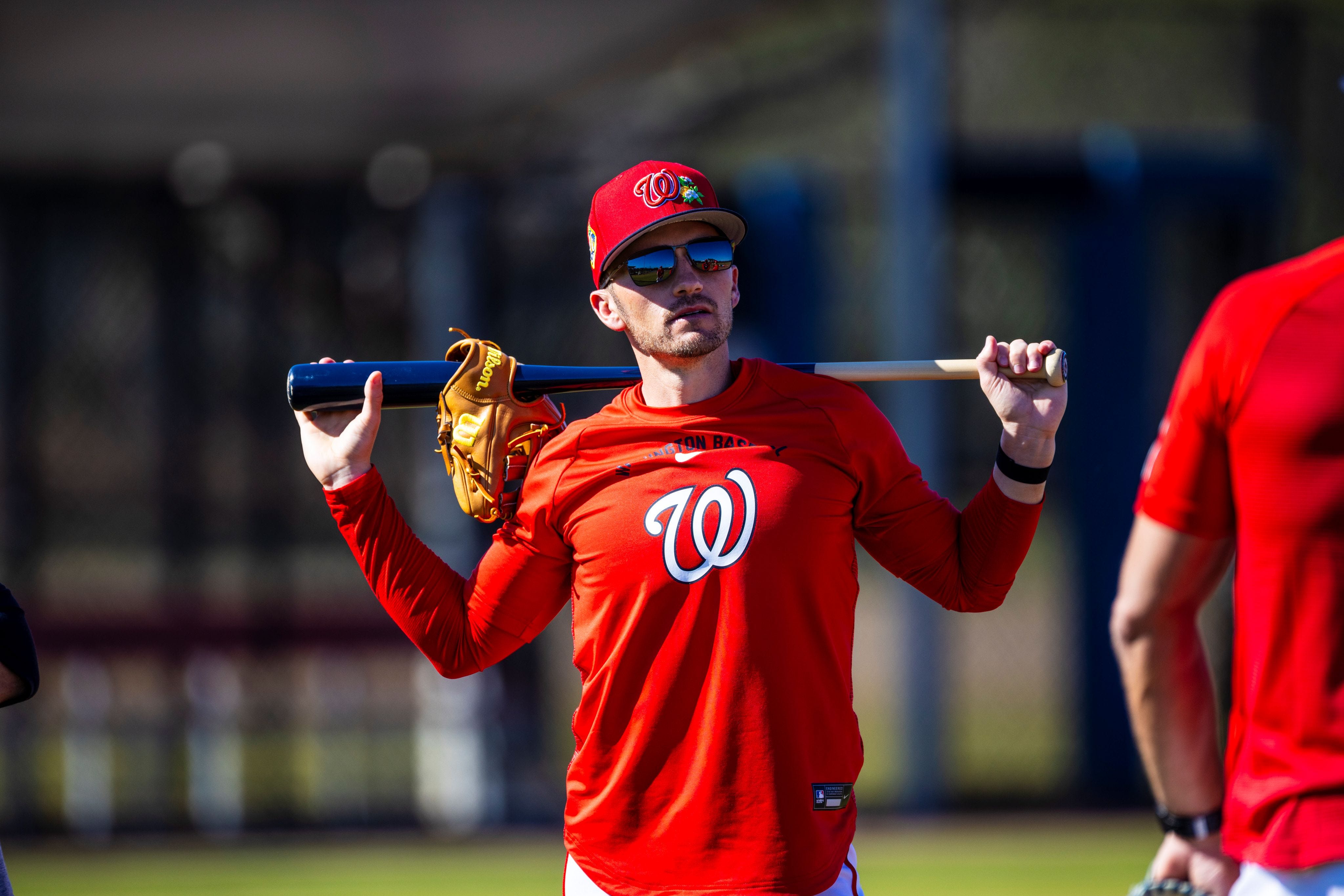
Blake Butera has been fielding questions from reporters every day for more than two weeks now since camp opened, and we’ve touched on all kinds of topics along the way. But reporters aren’t the only ones with questions for the new Nationals manager. Fans are curious themselves about his thoughts on a number of issues.
So this morning we present the first installment of a special feature here at Nats Journal. Founding Member subscribers to the site who were willing to go beyond the standard Annual Subscription rate were given the opportunity this week to submit questions for Butera. We got way more than I could reasonably ask him in one session, so I pared the list down to the 11 best queries. Some of them are serious. Some of them are lighthearted. In a couple of cases, multiple readers asked versions of the same question, so I included all of their names.
Many thanks to all of you who submitted questions, and apologies to those whose questions I didn’t use. I’ll do my best to give you priority on future installments of this series with other members of the organizations. And, of course, many thanks to Butera for agreeing to do this in the first place.
Here we go …
With the first few weeks of your managerial tenure under your belt, what has been the most surprising or unexpected aspect of being the one in charge on the field? – Jeff and Chris
I don’t know if this is specific to being in charge, but I would say just the personalities in the clubhouse, in terms of the players and staff. There’s just really good people here. I think when you come into a new place, especially as a manager, normally you come into an environment that needs some change, or a makeover. But every player here and every staff member has just been awesome. The hunger, the desire to work and want to be pushed and motivated … and just respectful, too. Everyone’s been really respectful and fun to work with. I think that’s been probably the biggest surprise. Outside of that, I think just our staff coming together and doing a really good job of putting together a schedule and a player progression for spring training. That’s been probably the most-rewarding part so far: Seeing these guys go out there and work on the things they need to work on and start to make some progress.
Many of the game’s most-successful managers – think Dave Roberts – have come to realize that using metrics and technology is important, but managing humans is still the most important part of their job. What are your challenges and opportunities in managing humans who are peers and near-peers in age? – Dan
I think he nailed it. I couldn’t have said it better myself. Most of this job, the chair I’m in, is managing people and relationships. And I think in terms of challenges, I think right now things are great. It’s spring training. We’re not playing meaningful games yet. We haven’t made cuts yet. We haven’t done some of those decisions, or had some of those tough conversations yet. In the middle of the season, there are going to be times when maybe we’re not playing so well. And making sure the relationships, the trust, the care we put into these guys every day right now ends up allowing those conversations and those relationships to not break, or not have that butting of heads, come July and August when we’re hopefully fighting for a spot in the division. I think all the work we’re putting in today matters for that.
Do you plan to invite former, retired Nationals players to be guest instructors at spring training (aside from Sean Doolittle)? – Joshua
Ryan Zimmerman reached out last week. He’s planning on coming down the beginning of March. I know we’d love to have Ian Desmond as well. At the end of the day, we want people that have played here previously to come around. I had a chance to talk to a lot of them during the fantasy camp (last month), and there seems to be a desire. They want to be around the team, too. And I think the more we can have former Nats players, especially former Nats players that won the World Series, who know what it means to wear a Nats uniform, the more they can be around our group, the better. So, Ryan Zimmerman’s probably the only official one that I know will be down here during spring training. But the plan is to have more.
Has the team thought about moving James Wood to first base? This helps alleviate the crowded outfield while solving the lack of power at first base, plus gets another bat into the lineup as DH. – David
I think he brings up a good point there. But I know James really wants to play outfield, and he really wants to get better out there. He knows he can improve out there. So our first job is to make sure we help him become the absolute best outfielder he can be. If there’s a time down the road where things change, we will always be open and have those conversations with James. But I think just the age, how young he is, the athleticism, giving him every opportunity in the outfield first is the right thing to do.
Last season we saw so many mental lapses, and it was excruciating to watch. What tools or drills are you using to address things like bad baserunning or fielding? And with no veterans on the team, how do you plan to hold them accountable when these lapses happen? – Michele
A great example is the drill we did (Monday), where we have a defense out there, we have baserunners out there. Even hearing some of our coaches and staff that have come from some other organizations, there were four or five different comments saying: “I’ve never seen that much energy in a baserunning drill, where guys are actually sliding.” When you get the buy-in, and you help them understand how important baserunning is … a lot of our message also has been controlling what you can control. Good baserunning, making the routine play, those are things you can control. You can’t always control if you get a hit or not. But you can control how hard you run, going first to third, sliding. All of those things, I think baseball fans appreciate and like to watch. I’m sure you can attest to that: The fundamentals have been a focal point for us so far.
I don’t think you necessarily need veterans to hold players accountable. A lot of these guys know what it should look like. And if they don’t, it’s our job as a staff to show them what it should look like and hold them accountable. And then eventually get to a point where they know what they’re capable of, what it should look like, and then they hold each other accountable.
Fans are interested in how the new-look Nationals organization will approach preparation for individual series or games. Who in the organization that fans may not know about will be involved in creating your lineups and helping you plan your pitcher usage? – Scott
Coming over from the Rays, we were heavy into projections and lineups and matchup charts. And it was always different. I’ve mentioned the 2020 season, we used 59 different lineups (in 60 games). And a lot of that is based on a model they’ve built internally that allows them to understand what the best lineup would look like, the best matchups. And a lot of times, it’s more like: Here’s the projection for every player on your team against that pitcher. And then the manager puts together the lineup based off that. Part of bringing (general manager) Ani Kilambi over here from Philadelphia was that he built a lot of that for the Phillies, he built a lot of that for the Rays. I have history with him and understand how good each of those teams’ models are, and the information they have and use to prepare for games and series. Ani was at the head of that for both of those organizations. So he’s going to have a lot to do with that.
Do you get tired of hearing that you’re the youngest manager in the last 50 years? – Mike
Yes. (Laughs) I understand. I understand it’s a talking point. At the end of the day, I want the focus to be on our players. I really don’t even want anybody to know who the manager of the Nationals is. Because it’s about them. If we do our job right as a staff, if I do my job right as a manager, all of the focus and attention should be on the guys on the field. That’s what I want it to be about at the end of the day. But I also can’t hide from the fact that I am super-young. I’ll own that part.
If you had to pick a walk-up song, specifically from your years in high school or college, what would it be? – Katie
Ooh, I could stay on the young theme and go with “Only the Good Die Young.” Right? I changed mine all the time (as a player). I never had one that I loved. I don’t have a good answer for this one.
What is your favorite sabermetric stat for pitching, hitting and fielding that we should follow for our development as an organization, from rookie ball to the majors? – James
Ooh, that’s a hard one to answer, too. We have internal numbers that we’re actually working through right now to formulate as our own. Offensively, just generically speaking, I’d say OPS. If they want to follow OPS, it would be great. Pitching, I’d go with FIP. And then defensively … defense is tough, because whether it’s FanGraphs, Baseball Savant, whatever, they all use different metrics for them. I would just say overall Defensive WAR, maybe on FanGraphs, would be best.
What is the hardest part of doing all this with a newborn? – Sam
It’s a few different things. One, I would say the lack of sleep. You have lack of sleep when you’re in this job, just in general. And then tacking on the baby … luckily my wife’s a rock star and she’s been doing the middle-of-the-night feedings, which has been nice. Outside of that, I think it’s just – and this is another thing my wife has been awesome about – when you’re at the field, making sure you can 100 percent mentally be at the field and not worried about what’s going on at home. Luckily, my wife has been awesome, and her family is around as well to help out with the baby. So I get to see her before I leave in the morning, and then sometimes when it’s a day game, I’ll see her at night.
Beyond the won-loss record, what will constitute a successful 2026 to you? – Susan, Derek, Andrew and Matthew
A successful 2026 to me is … a lot of it is buying into the culture and the standards that we have. Competitiveness. Being a good person. Showing up ready to work every day and giving your all. And then our job as a coaching staff, which we’ve told the players, is to make sure we help each player in there become the best version of themselves on and off the field. So with that, we want to make sure each player knows they’re not a finished product. We’ve done these player plan meetings where we can show them on the screen every part of their game, where they are currently, how we’re evaluating them internally as an organization and where we think we can get them to, and how we’re going to get them there. A lot of that requires plenty of early work, plenty of video review. And I think having the players buy in to the fact they’re in the major leagues but they’re still developing has been a big part of our success early on in camp. And it’s going to continue to provide us that success over the next 5-10-15 years.
Regardless of wins and losses, if we get to a point at the end of the year where we’re seeing improvements from every one of our players, that to me is success. And more so, it’s the pregame work. If anyone shows up to the field early for a game, the work they see before the 6:45 first pitch, we want to make sure guys are continuing to get better and we’re not just rolling the balls and bats out there to play and standing back. No, we’re going to be very hands-on and help these guys improve, no matter who they are, no matter where they came from, no matter how long they’ve been in the big leagues. That’s our job.
Whooo! This was great!!! Cannot wait for more of these.
what a great feature!