
Differences on display in Nats' first workout
From new technology to new routines to the manager throwing BP, the first pitchers and catchers workout looked different

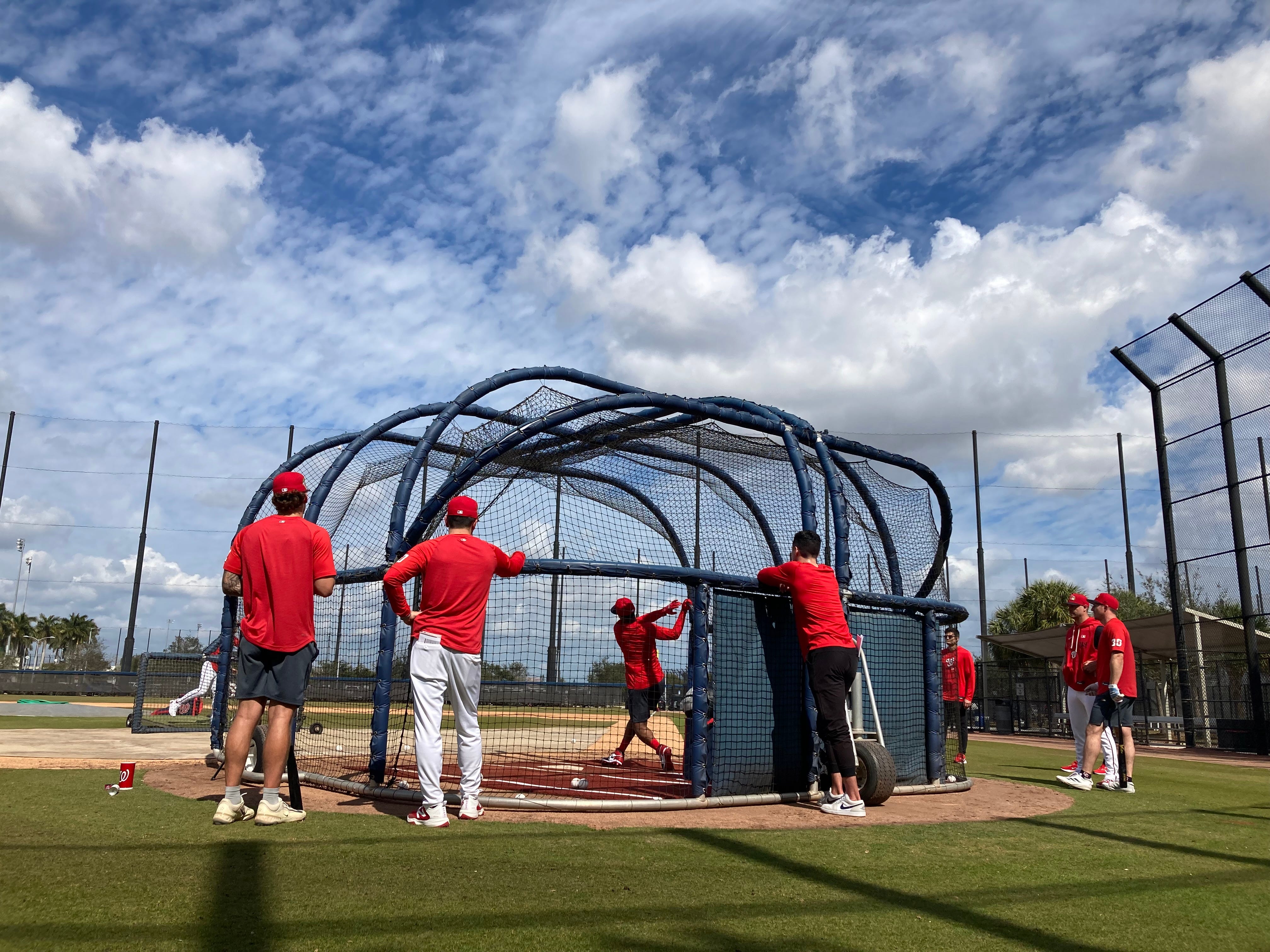
WEST PALM BEACH, Fla. – The first day of spring training workouts doesn’t change all that much from team to team. Coaches meet with pitchers and catchers before they take the field. Everybody stretches. Everybody warms up. Everybody takes part in some fundamental defensive drills. And then some segment of the pitching staff takes the mound to throw bullpen sessions.
You’ll find the same routine playing out across Arizona and both coasts of Florida this week. With some modifications depending on the particular camp you’re attending on a given day.
And at Nationals camp today, there were some notable differences from years past.
For starters, players are taking the field a bit later than they traditionally have in the past. Instead of a 9 a.m. stretch, it’s 10 a.m. And instead of a focus on those tried-and-true bullpen sessions, pitchers are going through more preparatory drills before ever grabbing a ball and standing on the mound.
“Hats off to our coaching staff, especially our pitching group,” manager Blake Butera said. “The job they’ve done fostering an environment where pitchers are super-diligent about their work, not just when they’re on the mound, but there’s a lot that goes into being prepared to throw. That starts with our coaching staff and the buy-in from our players.”
The changes include some new warm-up routines for pitchers that involve throwing balls from short-range off a bounceback net or a large black panel that provides instant feedback about velocity and other measurements.
President of baseball operations Paul Toboni emphasized a commitment to new technology since taking over the job in October. And the evidence is everywhere this spring, from the number of cameras positioned around every mound, to the Trajekt Arc pitching machines in the batting cage that simulate every major league pitcher, to little gizmos sprinkled throughout the practice fields.
“It’s very exciting for us,” catcher Drew Millas said of the additions. “We can just feel it in the pitchers’ work. There’s a lot of intention, there’s a lot of direction for everybody. There’s a clear mission that everybody has that general feel to. Not like in years past we didn’t have that, but it’s communicated very well to us. And it’s shown, too. From our perspective, it’s great.”
What tangible difference does the technology make for players?
“The ability to know if the changes you’re making are actually making a difference,” right-hander Jake Irvin said. “You can look at a curveball on any given day and be like: ‘That felt so much better. That felt like I had more depth on that.’ Now we can quantify it.
“Unfortunately, we had been behind the curve on that. And now I think they’re doing everything they can, not only to catch up, but I think to be kind of innovators in that space. The guys here really know what they’re doing with that. They’ve been around it their whole careers, and they’re bringing it here. I think there’s a lot we can learn from them from this technology.”
Not all technology has to look and sound complicated, or even expensive. Consider one of the most notable additions to the bullpen sessions: A thin, orange, rubber outline of a strike zone hovering over every plate. Pitchers can instantly see if the ball landed where they intended or not.
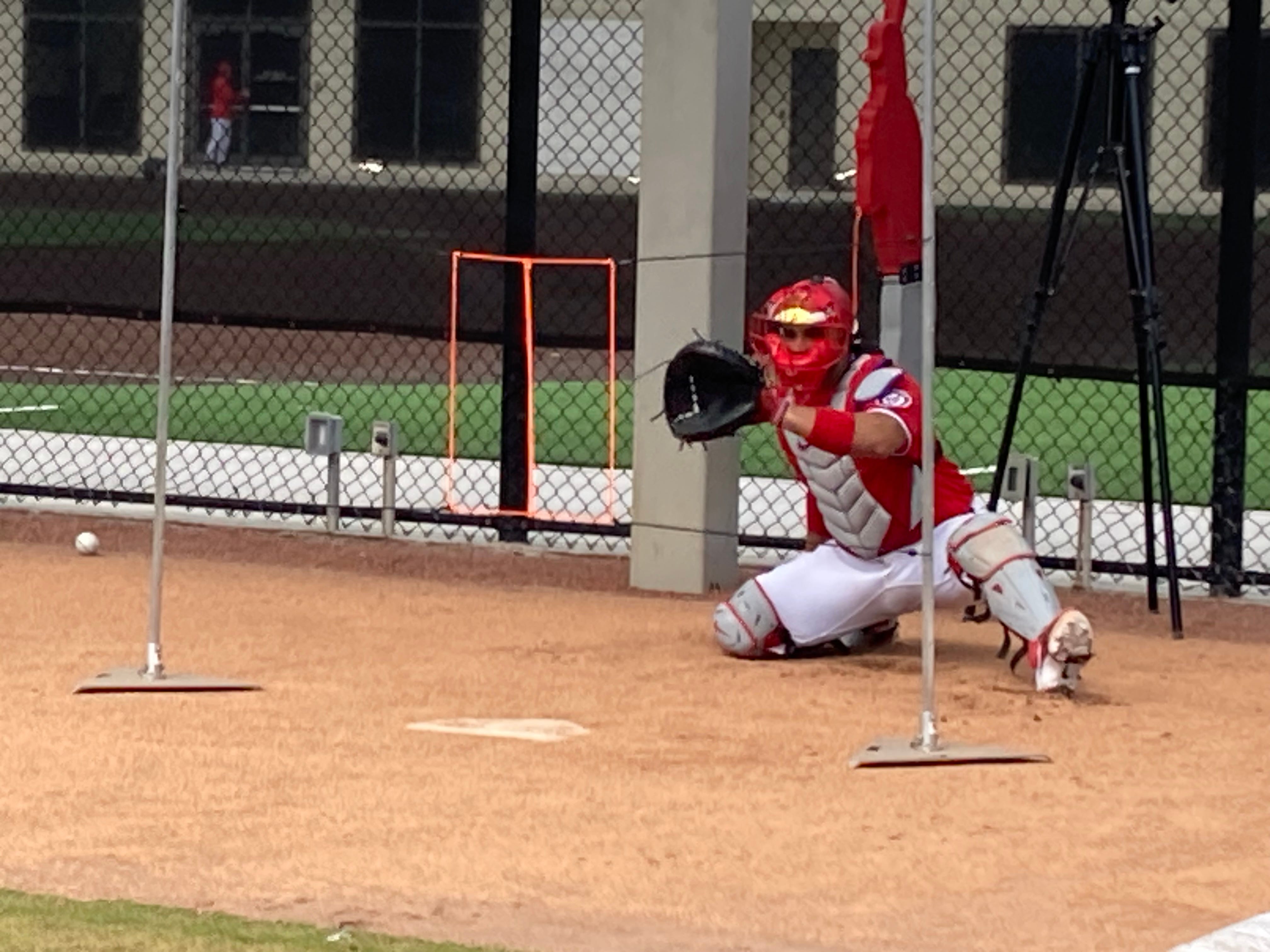
Not that the catchers squatting behind the plate are enthralled with the new additions, with pitches that nick the outline changing directions ever so slightly and forcing them to make instantaneous adjustments just to catch the ball squarely in their mitts.
“Next question!” Drew Millas said with a laugh when asked what he thinks about the strike zone. “No, it’s fine. Sometimes it’s hard to see, but we’re there for the pitcher at the end of the day. And whatever they need, we can execute to the best of our ability, if that’s putting a rope in front of our face or whatever.”
As noted previously, a ton of position players have reported early, and they were out on the fields at the same time as the pitchers and catchers, going through their own workouts. That included traditional rounds of batting practice, with one notably unconventional person among the coaches throwing to hitters: Butera.
Yes, the manager is throwing BP, including to a primary group today that featured Dylan Crews and Jacob Young. Is that something he intends to do on a regular basis?
“Whenever they need me to,” Butera said. “I enjoy being out there. I enjoy giving our coaches sort of a break. These guys like to hit, so there’s a lot of throwing. So anytime I can go out there and give these guys a rest, I’m happy to.”
Has anyone informed the 33-year-old rookie skipper he doesn’t have to do this anymore, that most major-league managers don’t throw BP?
“Not specifically,” Butera said with a laugh. “But the role I was in the last couple years with the Rays, that was something I did. And there were a few comments from players saying: ‘Whoa, a farm director that throws BP and takes ground balls with us?’ I think it’s cool for them. It shows I’m just a normal person. I’m not too big for any small job.”
Suffice it to say, while there are similarities in this camp to every other camp taking place across Arizona and Florida, there are some notable differences, especially compared to prior camps here in West Palm Beach.
“It’s completely different,” Irvin said. “I think every change we’re making is for the benefit of the organization, for the benefit of the player. One thing you can really tell is everybody who’s a part of this really cares. They want to help us compete for the championship. That’s the goal at the end of the day. I think they’re going to do a lot of great things for development. But at the end of the day, that development is going to help us win a championship.”
In my fantasy scenario, the Nats development was so bad under Rizzo that everyone "breaks out" this year just from transitioning to a more sophisticated regime - know it's not likely across the board, but quotes like Irvin's here give me hope!
Enjoyed. Keep up the good reporting and observations